


For over 45 years, My Sister’s Place has been an innovator in changing lives by providing D.C.’s first hotline and first shelter dedicated to survivors of domestic violence. MSP also offered the first Batterer Intervention group. Since 1979, we have remained a cornerstone of the District’s response to this pressing public health issue, with our impact continuing to grow.
MSP is unique in offering a full continuum of care—from emergency housing through transitional-to-permanent housing and ultimately into permanent, stable housing. Our experienced team of case managers and residential counselors provides as-needed clinical counseling, case management, and comprehensive services to help survivors overcome barriers on their journey toward stability and independence. In addition, MSP provides training, case consultation, and advocacy to engage and educate communities in the prevention of violence and abuse.
Our goal is to end the cycle of domestic violence, and empower everyone to build healthy lives and relationships.
Interested in our Programs & Services?
Our History
2024
2024
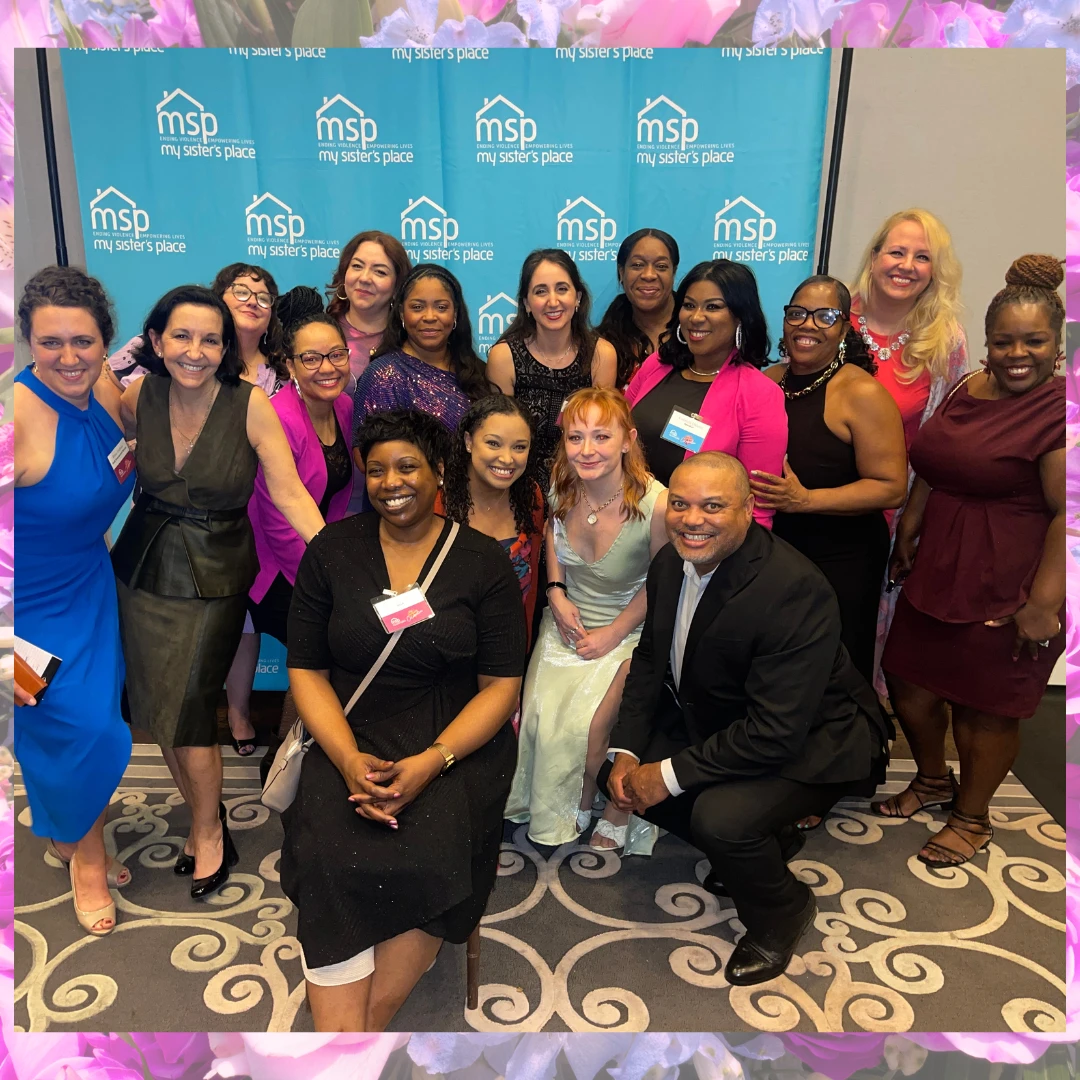
In 2024, we commemorated the 45th Anniversary of MSP at the Decatur House! Our initiatives have expanded significantly, benefiting more than 500 women and children annually. Our offerings encompass two emergency housing sites, transitional housing, including rental payments for up to two years, emergency funds for families, and a wide range of comprehensive support services, including workforce development, financial empowerment, resilient futures, and additional assistance.
2023
2023
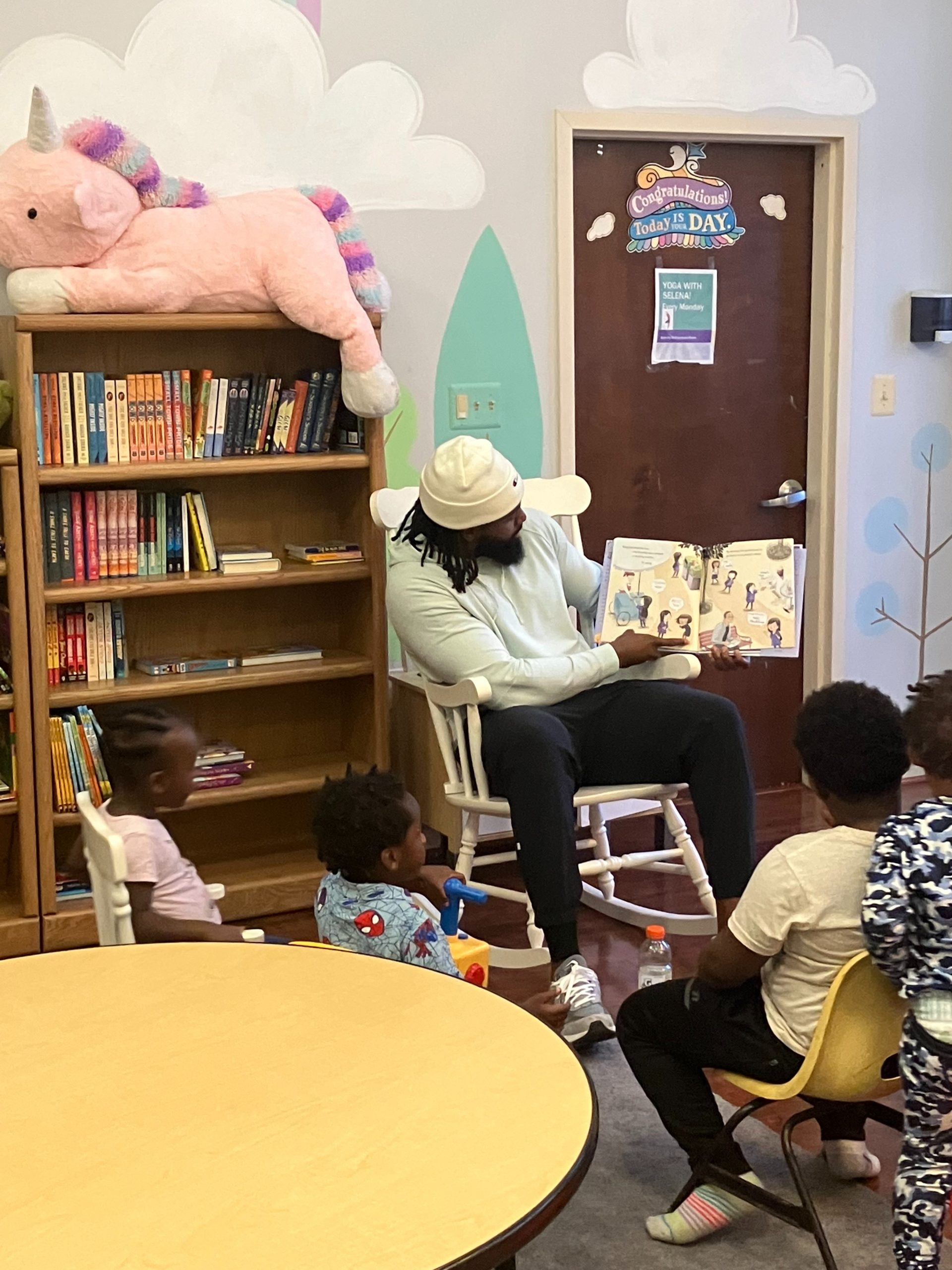
In January 2023, we introduced the initial emergency cash transfer initiative for domestic violence survivors. This program assisted 45 families in our RISE Transitional Housing program by providing them with unrestricted monthly payments for a period of two years.
2020s
2020s
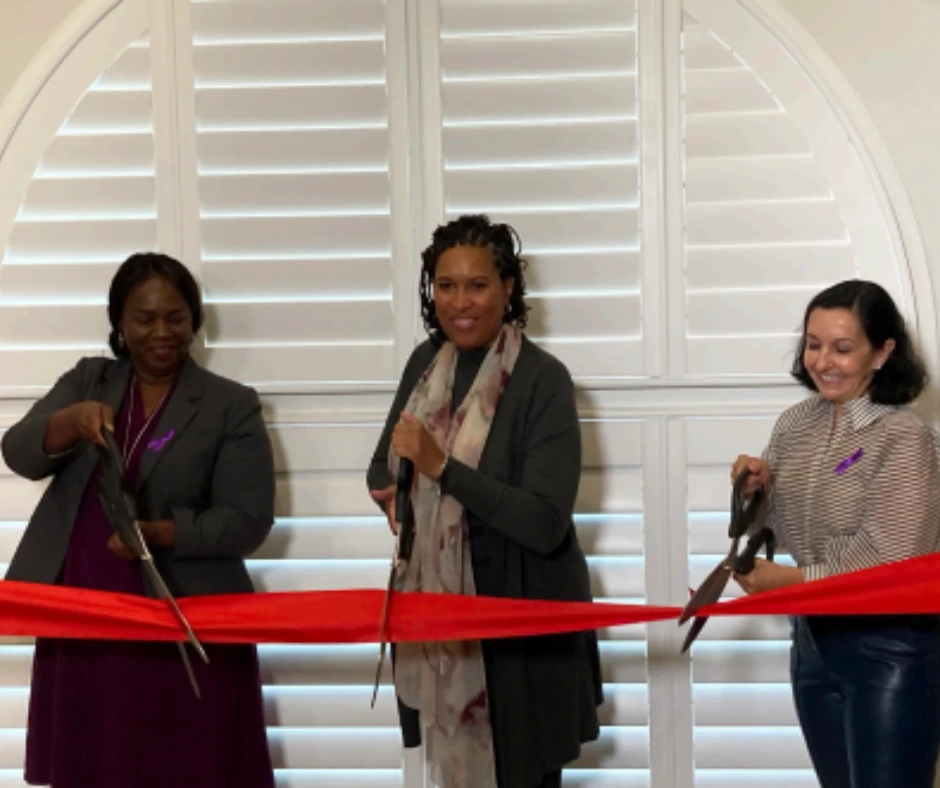
MSP inaugurated Sanctuary II, the second emergency shelter for domestic violence survivors, and enhanced its transitional housing program through RISE Plus. Over a span of two years, MSP offered rental assistance and case management to clients, benefiting an extra 30 individuals each year.
2018
2018
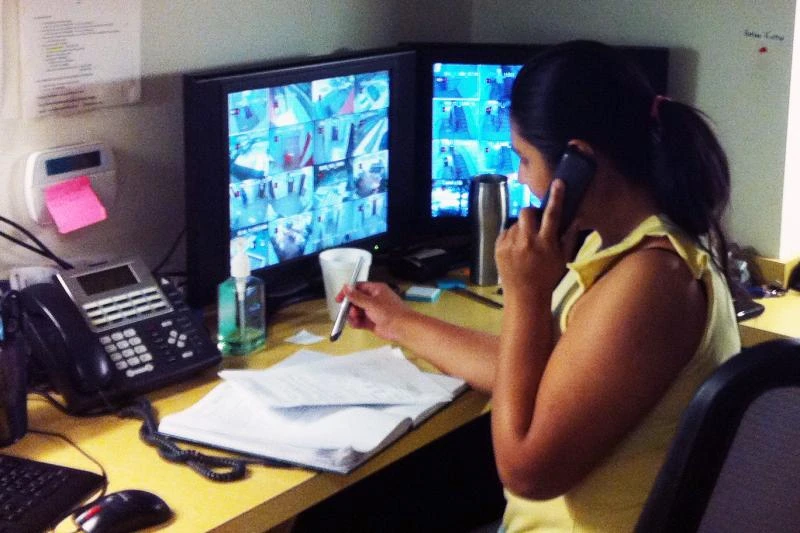
After 42 years, MSP transferred its domestic violence hotline to the DC Victim Hotline to enhance service efficiency. Additionally, as part of the Latino Outreach Program, MSP established the first fully integrated Spanish website among domestic violence organizations in D.C.
Mid 2000s
Mid 2000s
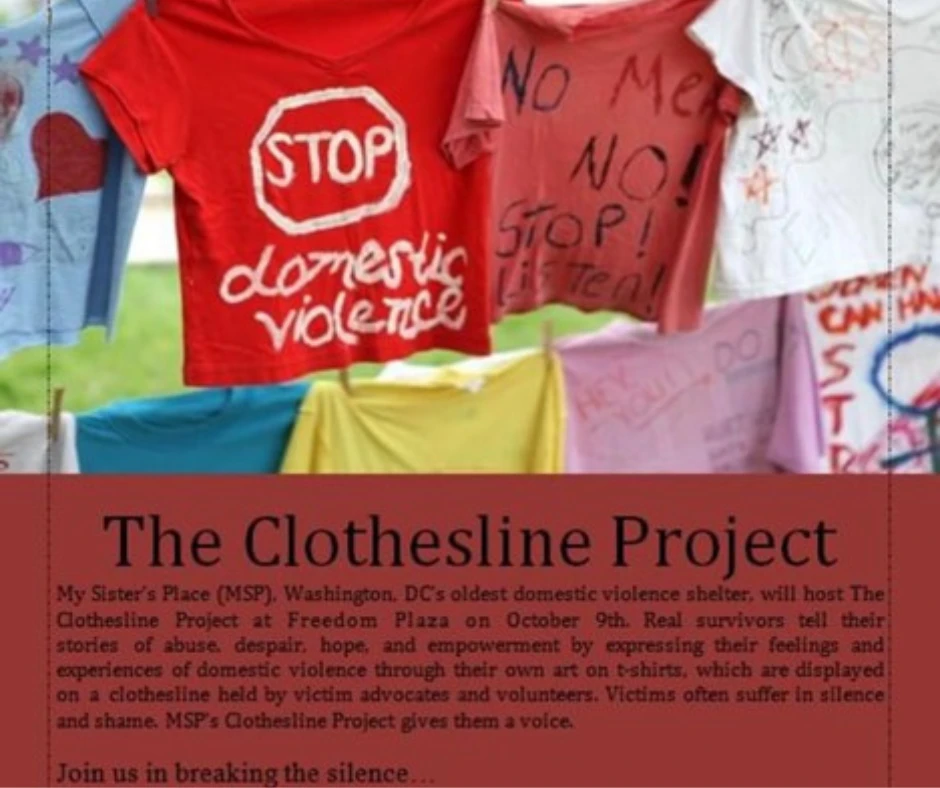
Continued raising community awareness through the Clothesline Project.
“The underlying message of the clothesline,” says Suzanne Marcus, coordinator of the project, “is to break the silence surrounding the issue of domestic violence. We are standing on the wall, wailing, amid the hush. We are hanging society’s dirty laundry in public, taking abuse out of the privacy of the bedroom, the family, and the morgue.”
2010 – 2012
2010 – 2012
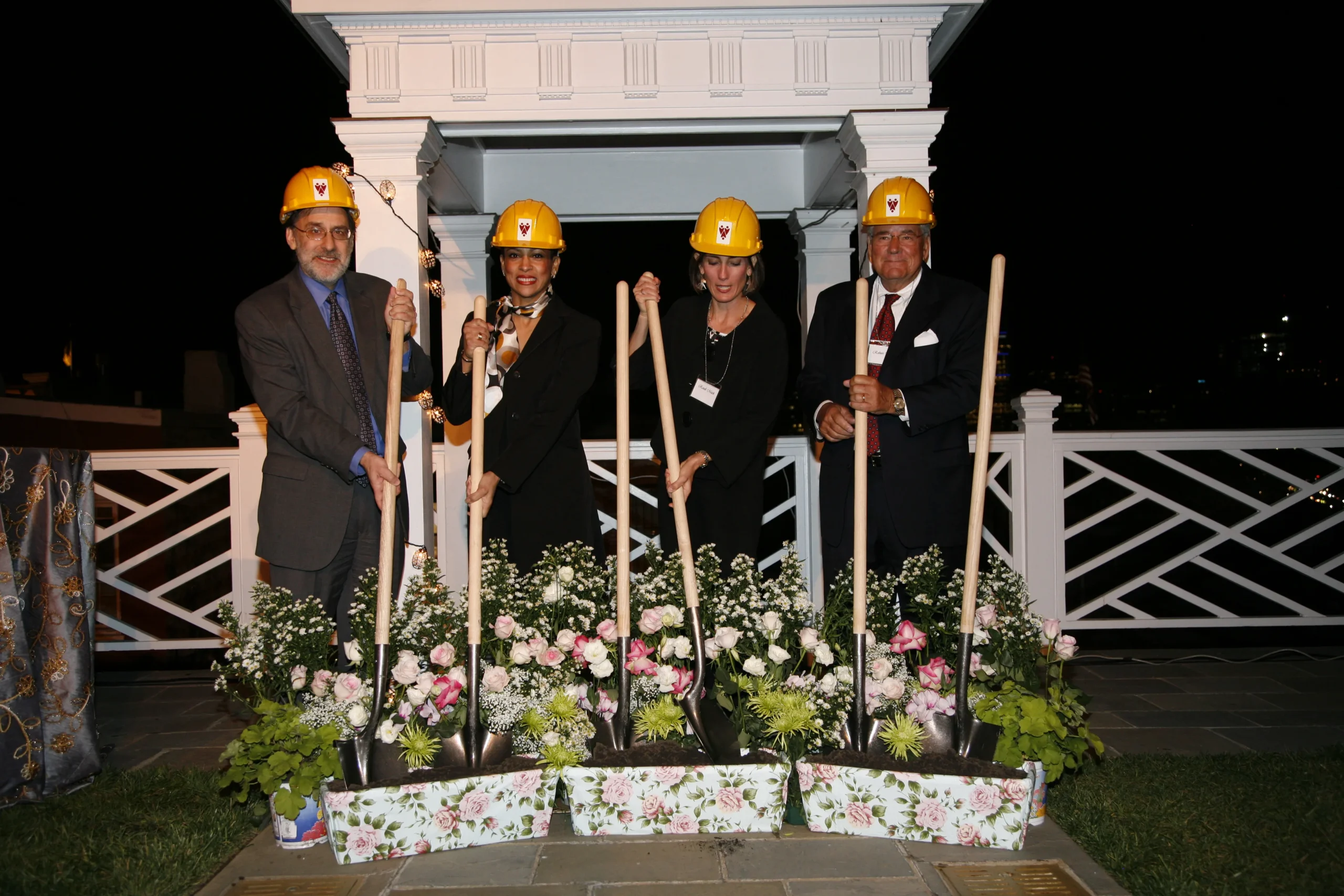
In 2012, MSP initiated the construction of Sanctuary Plus, a refurbished 45-bed emergency shelter. Additionally, during the same year, RISE (Reaching Independence through Survivor Empowerment) was introduced. This program supports 30 families annually through a unique transitional-to-permanent housing initiative.
2000s
2000
MSP partnered with the Crime Victim Compensation Program to introduce the Emergency Services Center. This initiative offered therapeutic counseling and case management services to women and children referred through the court system.
1999
1999
The Women’s Legal Defense Fund (WLDF) launched its Taskforce on Abused Women together with the Junior League of Washington, starting the first domestic violence hotline for survivors of domestic violence. WLDF opened one of D.C.’s first domestic violence shelters, which had 15 beds.
1990 – 1998
1990 – 1998
MSP partnered with Whitman-Walker Clinic to establish a support group for lesbian survivors of domestic violence, marking the inception of the first LGBTQ+ friendly shelter in D.C.
In 1994, MSP expanded into a 24-bed residential shelter with a transitional housing program comprising six apartments and a hotline. By 1998, MSP introduced SOS, a counseling program that provided complementary support to survivors as they navigated their path to recovery. Additionally, by
1980 – 1990
1980 – 1990
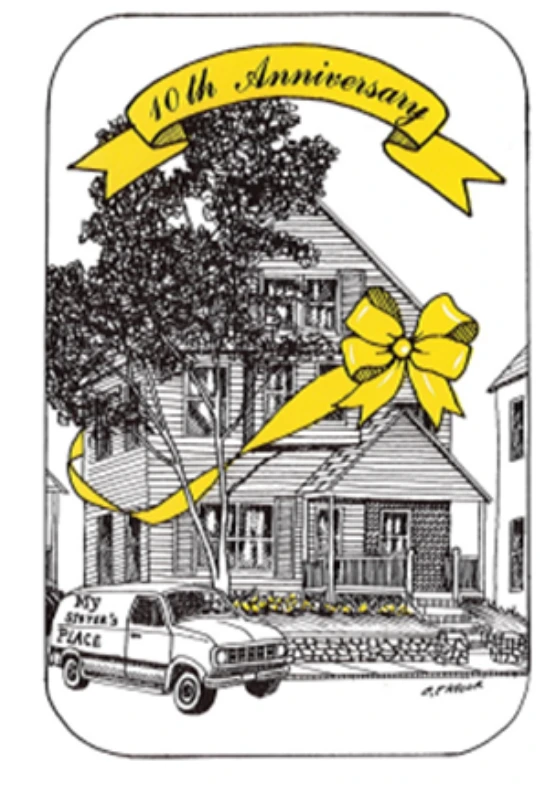
1989 marked the Tenth Anniversary of My Sister’s Place Spring Benefit Auction. During this time, My Sister’s Place became the organization’s official name and operated separately from WLDF. In the same year, MSP introduced its initial transitional housing program aimed at supporting domestic violence survivors. This program helped women and children transition to independent living through group and individual counseling sessions.
1976 – 1980
1976 – 1980
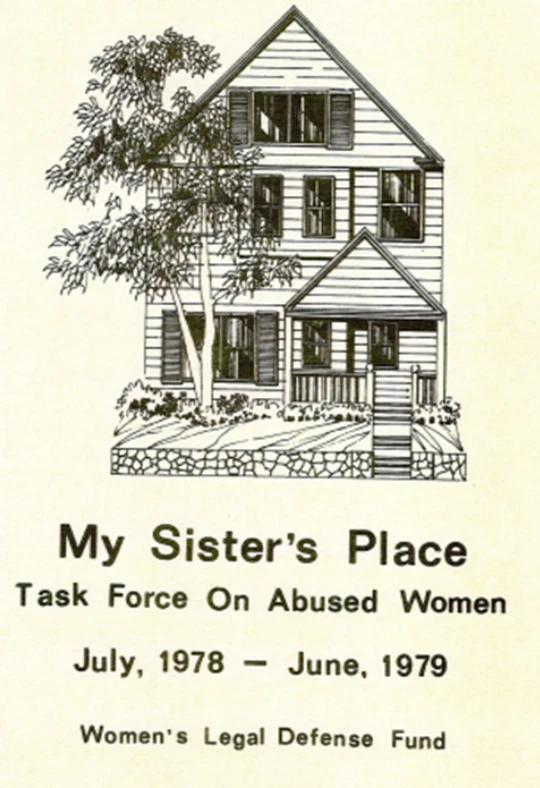
The Women’s Legal Defense Fund (WLDF) initiated the Taskforce on Abused Women in collaboration with the Junior League of Washington, introducing the inaugural domestic violence hotline for survivors. Additionally, WLDF established one of the first domestic violence shelters in D.C., providing 15 beds for those in need.
1976
1976
My Sister’s Place is Founded
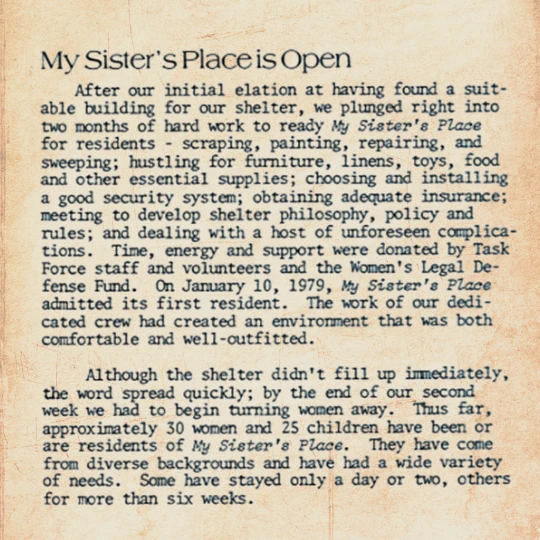
On January 10, 1979, My Sister’s Place welcomed its first resident. While the shelter wasn’t full in its first few days, by the second week it had already reached capacity.